
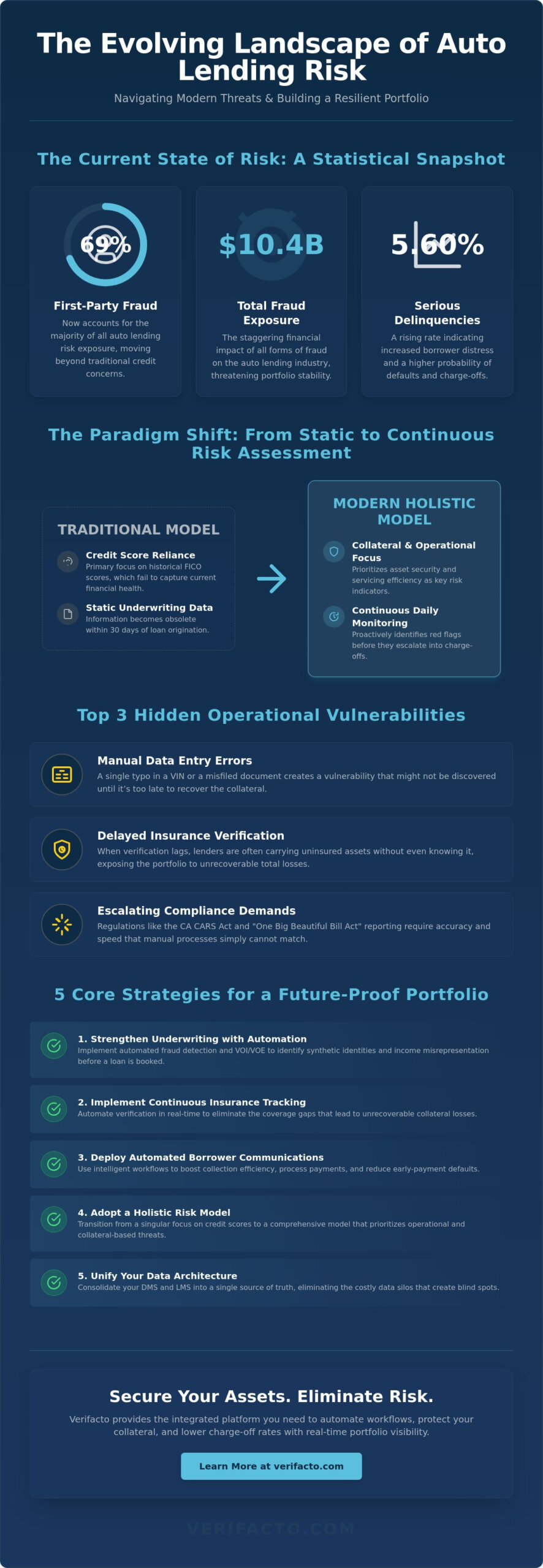
Did you know that first-party fraud now accounts for 69% of all auto lending risk exposure? With total fraud exposure hitting $10.4 billion and serious delinquencies reaching 5.60%, the traditional methods for mitigating risk in auto lending are no longer enough to protect your bottom line. You’re likely feeling the pressure of rising early-payment defaults and new regulatory demands like the One Big Beautiful Bill Act reporting requirements. These operational hurdles don’t just drain your staff’s time; they actively threaten your collateral security in an increasingly complex environment.
Detecting these red flags early prevents high-risk contracts from ever reaching your books. When you automate these checks, you don’t just stop fraud; you accelerate the funding process for your legitimate customers. For lenders and businesses requiring legal verification in the Brazilian market, you can find out more about Consulta Jurídica Completa CPF e CNPJ to ensure comprehensive due diligence on potential borrowers.
It’s frustrating to watch data silos between sales and servicing create blind spots that lead to preventable charge-offs. We believe that maintaining a healthy portfolio requires a proactive, results-oriented approach to asset protection. This guide provides the strategic framework you need to leverage modern technologies and secure your assets against volatility. You’ll learn how to implement automated workflows, streamline insurance tracking, and utilize integrated payment processing to transform your risk management into a seamless operation that delivers real-time visibility and lower charge-off rates.
Key Takeaways
- Master the transition from traditional credit scoring to a holistic risk model that prioritizes operational and collateral-based threats.
- Strengthen your underwriting process with automated fraud detection to identify synthetic identities and income misrepresentation before the loan is booked.
- Implement real-time strategies for mitigating risk in auto lending by automating insurance tracking to eliminate the gaps that lead to unrecoverable losses.
- Boost collection efficiency and reduce early-payment defaults by deploying automated borrower communication workflows.
- Consolidate your data into a single source of truth by unifying your DMS and LMS architecture to eliminate costly operational silos.
Understanding the 2026 Auto Lending Risk Landscape
In the current market, auto lending risk has evolved into a multi-dimensional threat that impacts both principal recovery and overall portfolio yield. It’s no longer enough to look at a credit score and assume your investment is safe. True risk management involves protecting the asset’s physical security while ensuring the loan remains profitable throughout its entire lifecycle. While understanding credit risk is the traditional starting point, today’s lenders must account for rapid shifts in borrower behavior and asset valuation. We’re seeing a significant move away from purely credit-based assessments toward a focus on operational and collateral-based risks.
One of the biggest traps in the industry is relying on static underwriting data. Information gathered during the application process often becomes obsolete within 30 days of loan origination. A borrower’s employment status, insurance coverage, or even their residency can change overnight. If you’re only reviewing your portfolio on a quarterly basis, you’re essentially flying blind. Mitigating risk in auto lending now requires a “Continuous Risk” model. This approach demands that lenders monitor their portfolios daily to catch red flags before they turn into expensive charge-offs.
The Rise of Operational Vulnerabilities
Manual data entry remains one of the most persistent “hidden” risks in loan servicing. A single typo in a VIN or a misfiled insurance document creates a vulnerability that might not be discovered until it’s too late to recover the collateral. Delayed insurance verification is an especially critical failure point. When verification lags, you’re often carrying uninsured assets without even knowing it. Additionally, the cost of compliance failures is skyrocketing. With new regulations like the California CARS Act taking effect in October 2026 and the IRS “One Big Beautiful Bill Act” reporting requirements, manual processes simply can’t keep up with the necessary accuracy and speed.
Macro Trends Impacting Portfolio Stability
Current vehicle depreciation rates are putting immense pressure on Loan-to-Value (LTV) ratios. As used car prices fluctuate, many borrowers find themselves “underwater” much earlier in the loan term. This lack of equity, combined with tightening consumer liquidity, is a primary driver of early-stage delinquency. We define layered risk as the intersection of high LTV and subprime credit. When these two factors meet, the probability of a “bust out” or a total loss increases exponentially. To maintain stability, lenders must have real-time visibility into the status of their collateral to ensure that every vehicle in the portfolio remains protected and accounted for.
Strategic Underwriting: Building a Resilient Front-End
The front end of your lending operation serves as the primary barrier against portfolio decay. While traditional credit scores provide a historical baseline, they often fail to capture a borrower’s current financial trajectory. Mitigating risk in auto lending requires you to move beyond the FICO score and embrace alternative data like banking history and utility payment consistency. This holistic view allows you to identify resilient borrowers who might otherwise be overlooked by rigid, legacy models. This proactive stance is the first step in mitigating risk in auto lending effectively.
Establishing strict Loan-to-Value (LTV) caps is equally vital to long-term stability. As noted in a recent CFPB report on auto lending risks, excessive LTV ratios often correlate with higher default rates and significant collateral recovery challenges. By aligning these caps with specific credit tiers, you ensure that every deal has enough equity to withstand market shifts. Strengthening your relationship with dealer partners also ensures that vehicle valuations are accurate from the moment of sale, preventing “inflated” collateral from entering your books.
Data-Driven Decisioning Frameworks
Modern underwriting isn’t a “set it and forget it” process. It requires real-time analytics to refine your tiered models as market conditions change. If your team is manually reviewing every outlier, you’re losing both time and consistency. Implementing automated exception management protocols ensures that underwriters follow a unified strategy while still allowing for human judgment where it matters most. Automated Verification of Income and Employment (VOI/VOE) is no longer a luxury; it’s a necessity. These tools remove the guesswork and eliminate the delays associated with manual phone calls or email chains. For lenders looking to tighten their front-end operations, exploring an integrated dealer management system can provide the data transparency needed to verify collateral and borrower details instantly.
Combating Application Fraud
Application fraud is becoming increasingly sophisticated. Synthetic identities and “doctored” pay stubs are harder to spot with the naked eye than they were even two years ago. Automated document verification tools analyze digital metadata to flag inconsistencies that a human might miss. To stay ahead, your team should follow a rigorous verification checklist during the application stage:
- Cross-reference social security numbers against known synthetic identity patterns and death master files.
- Verify employer physical addresses and phone numbers through independent, third-party databases.
- Use digital tools to check for font inconsistencies or “layered” PDF edits on income documents.
- Compare applicant IP addresses against their stated residency to flag potential out-of-market fraud.
Detecting these red flags early prevents high-risk contracts from ever reaching your books. When you automate these checks, you don’t just stop fraud; you accelerate the funding process for your legitimate customers.
Continuous Collateral Protection: Managing the Insurance Gap
Insurance lapses represent the single greatest threat to collateral recovery in today’s market. While a borrower’s credit score might suggest a high probability of repayment, an uninsured vehicle involved in a total-loss accident results in an immediate and unrecoverable charge-off. Many lenders still treat insurance verification as a one-time task during the funding process. This creates a dangerous blind spot that grows every day the loan is active. Mitigating risk in auto lending requires a shift from this static mindset to a strategy of continuous, portfolio-wide protection.
Manual verification methods are notoriously slow and error-prone. Relying on staff to call agents or wait for paper notices in the mail is reactive management at its worst. By the time your team discovers a lapse, the damage is often already done. A “zero-gap” strategy eliminates this vulnerability by ensuring every asset in your portfolio remains covered 24/7. This level of security is only possible through modernized systems that provide real-time visibility into policy status. It allows you to act before a lapse becomes a loss, maintaining control over your collateral at all times.
The Mechanics of Real-Time Insurance Tracking
Modern technology now allows for a direct link between your portfolio and insurance carrier databases. Instead of waiting for a “non-pay” notice to arrive via traditional mail, real-time insurance tracking identifies cancellations or non-renewals the moment they occur in the carrier’s system. This triggers an automated notification process that informs the borrower of the deficiency immediately. This speed doesn’t just protect the asset; it significantly reduces “false placements.” These are the frustrating instances where a lender places insurance on a vehicle that is actually covered, which leads to administrative headaches and damaged borrower relationships. Accurate data synchronization ensures you only intervene when it’s absolutely necessary. To build a comprehensive monitoring program, review the complete framework for how to track auto insurance on a loan portfolio and eliminate coverage gaps across your entire book of business.
Implementing Collateral Protection Insurance (CPI)
Even with the most advanced tracking, some borrowers will still fail to maintain their required coverage. This is where CPI Solutions serve as your essential secondary safety net. CPI protects your financial interest in the vehicle when the borrower’s policy fails, ensuring that your principal is never left uncollateralized. Implementing a professional program requires strict adherence to compliance and disclosure requirements to meet 2026 regulatory standards. However, the ROI is undeniable. You’ll see a direct reduction in charge-offs and a massive decrease in the administrative burden of chasing down proof of insurance. By integrating these tools into your workflow, you transform a high-risk manual process into a streamlined, automated system that guarantees collateral security. Lenders looking to eliminate manual paperwork entirely can learn how insurance tracking in loan management software delivers real-time API-driven automation that keeps every policy status current without staff intervention.
Operational Efficiency as a Risk Mitigation Tool
Operational efficiency is often mistaken for a simple back-office metric, but in reality, it’s a critical pillar for mitigating risk in auto lending. When your servicing workflows are fragmented, you create gaps where delinquencies can quietly spiral into defaults. By improving collection efficiency for auto loans, you aren’t just saving administrative hours; you’re actively reducing the probability of a total loss. Speed and consistency in servicing ensure that every account receives the same level of scrutiny, preventing high-risk borrowers from falling through the cracks of a manual system.
Standardizing your workflows ensures that your team handles every delinquent account identically. This consistency is vital for both portfolio stability and regulatory compliance. When your staff follows a structured, automated process, they spend less time on data entry and more time on high-value tasks like resolving complex payment issues. This shift from a reactive to a proactive stance is essential for maintaining control over your assets in a volatile market. It’s about building a system that works predictably, regardless of external economic pressures.
Automated Communication Strategies
Many defaults aren’t the result of a borrower’s inability to pay, but rather simple forgetfulness. You can prevent these “accidental” delinquencies by deploying automated SMS and email reminders for upcoming payment dates. This proactive outreach keeps your loan top-of-mind without requiring a single manual phone call from your team. Beyond payments, you can use these same automated channels to request updated insurance documents or notify borrowers of policy changes. This reduces the need for aggressive collection tactics later in the cycle, as you’ve already established a consistent, helpful line of communication that encourages on-time performance.
Streamlining the Payment Lifecycle
Friction in the repayment process is a significant risk factor. If it’s difficult for a borrower to pay you, they likely won’t. Integrating payment processing directly into your loan management workflow allows you to offer multi-channel options like ACH, web portals, and recurring payments. High adoption of recurring payments is one of the most effective ways to stabilize your portfolio’s cash flow. It ensures funds are pulled on the due date, eliminating the delay between a borrower’s paycheck and your receipt of the payment. Real-time payment posting is also critical; it prevents “double-dipping” errors and ensures your servicing data is always accurate. To see how these tools work together to protect your bottom line, explore Verifacto’s integrated payment solutions today.
The Future of Risk: Integrated LMS and DMS Architecture
Operating with disjointed software systems is one of the most overlooked vulnerabilities in modern finance. When your sales data lives in one silo and your servicing data in another, you’re essentially creating a map with missing pieces. This fragmentation leads to communication breakdowns, missed deadlines, and inaccurate reporting. For those focused on mitigating risk in auto lending, the goal must be a unified ecosystem. integrated DMS and LMS platforms provide a single source of truth that ensures every department is working from the same real-time data set.
Cloud-based technology plays a vital role in this architecture by maintaining data integrity and security. Unlike legacy on-premise systems that require manual updates and hardware maintenance, cloud solutions provide seamless synchronization and robust disaster recovery. This technical foundation is what allows Verifacto to serve as a comprehensive partner for lenders. By unifying your risk management tools into a single platform, you eliminate the friction that typically slows down operations and increases the likelihood of error.
Bridging the Sales-to-Servicing Gap
A unified system allows data to flow seamlessly from the initial deal desk directly to the collections queue. There’s no need for manual re-entry of borrower information, which significantly reduces “human-in-the-loop” errors that can invalidate contracts or delay funding. This integration also provides substantial audit trail benefits. During regulatory exams, having a clear, chronological record of every interaction—from the first application to the latest payment—demonstrates a level of control that disjointed systems can’t match. It transforms compliance from a stressful event into a routine verification of your standard operating procedures.
Scalability and Portfolio Growth
Automation is the key to scaling your lending operation without a corresponding increase in headcount. When your LMS and DMS are integrated, routine tasks like payment posting and insurance verification happen automatically. This efficiency allows your team to manage a larger volume of loans while maintaining the same high standards for mitigating risk in auto lending. Real-time reporting also enables you to identify “toxic” trends early. If a specific credit tier or geographic region starts showing unusual delinquency patterns, you’ll see it in your dashboard immediately, not weeks later in a post-mortem report. Empower your lending operation with Verifacto’s integrated risk management tools to ensure your growth is both rapid and secure.
Secure Your Competitive Advantage
The 2026 lending environment demands a total departure from reactive management. You’ve seen how shifting to a continuous risk model and bridging the gap between sales and servicing transforms your operational stability. By moving beyond static credit scores and implementing real-time collateral tracking, you gain the control necessary to navigate market volatility. Mitigating risk in auto lending is no longer about predicting the future; it’s about building an infrastructure that responds to changes the moment they occur.
Verifacto provides the tools you need to secure your assets and scale your operation with confidence. Our platform offers real-time insurance tracking for 100% collateral visibility, ensuring you’re never carrying unprotected risk. With an integrated LMS and DMS architecture, you’ll eliminate the data silos that lead to costly manual errors. Our automated borrower communication tools keep your portfolio performing without increasing your team’s workload.
Secure Your Portfolio with Verifacto’s Integrated Risk Solutions
You have the roadmap to a more resilient portfolio. Now it’s time to take the decisive action that protects your bottom line and fuels long-term growth.
Frequently Asked Questions
What are the most common risks in auto lending today?
Fraud exposure reached $10.4 billion in 2025, with first-party fraud representing 69% of that total. Beyond fraud, lenders face significant threats from insurance lapses and rapid vehicle depreciation that negatively affects LTV ratios. These risks are often compounded by manual data entry errors that create blind spots in your daily portfolio monitoring.
How does automated insurance tracking reduce lender risk?
Automated tracking connects you directly to insurance carrier data to provide real-time updates on policy status. This eliminates the dangerous delay of waiting for paper notices to arrive in the mail. By identifying a cancellation the moment it happens, you can intervene before an uninsured loss occurs, ensuring your collateral remains protected at all times.
Can integrated DMS and LMS software actually lower default rates?
Yes, integration lowers defaults by ensuring the collections team has immediate access to the same data as the sales team. This eliminates the data silos that often lead to missed communication or incorrect payment processing. When your systems work together, you can identify and resolve delinquency patterns much faster than with disjointed manual processes.
What is the difference between credit risk and collateral risk?
Credit risk focuses on a borrower’s financial reliability and likelihood of repayment, while collateral risk focuses on the asset’s physical security and market value. A borrower might have a high credit score but still represent a collateral risk if the vehicle is uninsured or depreciating faster than the loan balance. Mitigating risk in auto lending requires managing both dimensions simultaneously.
How can small lenders compete with big banks in risk management?
Small lenders compete by adopting agile, cloud-based technologies that bigger banks often struggle to implement due to their legacy systems. By using integrated LMS and DMS platforms, smaller operations can achieve a level of automation and real-time visibility that rivals or exceeds the capabilities of much larger institutions. This agility allows for faster responses to market shifts.
Is Collateral Protection Insurance (CPI) compliant for all lenders?
CPI compliance is generally tied to specific state regulations and the language in your original loan agreements. Most contracts allow for lender-placed insurance if a borrower fails to maintain coverage, but you must follow strict disclosure and notification requirements. You should always check your specific state’s rules to ensure your program remains fully compliant and transparent.
How often should I audit my auto loan portfolio for risk?
You should move toward a continuous monitoring model rather than relying on traditional monthly or quarterly audits. In a volatile market, static data becomes obsolete within 30 days of loan origination. Automated systems allow for daily visibility into your portfolio, which is the most effective way of mitigating risk in auto lending in the current environment.
What role does borrower communication play in mitigating risk?
Proactive communication is a powerful tool for preventing “forgetfulness” defaults. Automated SMS and email reminders keep payment dates top-of-mind for the borrower without requiring manual effort from your staff. This consistent, low-friction outreach establishes a professional relationship that encourages on-time performance and reduces the need for aggressive and costly collection tactics later.