
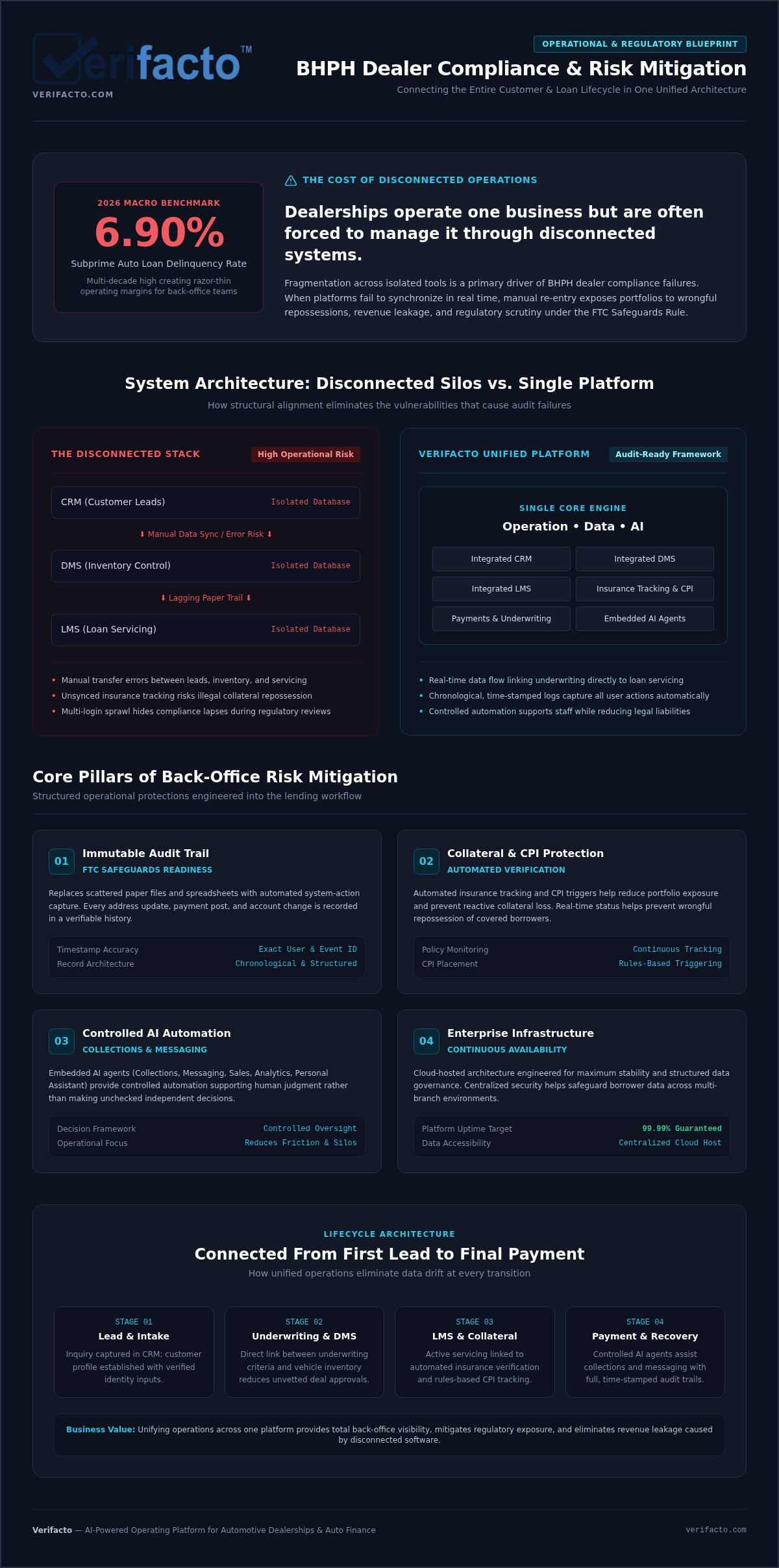
With subprime auto loan delinquencies reaching a multi-decade high of 6.90% in 2026, the margin for error in your back-office operations has never been thinner. Dealerships operate one business but are often forced to manage it through disconnected systems. This fragmentation isn’t just a daily headache; it’s a primary driver of bhph dealer compliance failures. When your DMS doesn’t talk to your insurance tracking or your collections agents, you risk wrongful repossessions and costly regulatory scrutiny under the FTC Safeguards Rule. You likely feel the weight of manual insurance verification and the constant anxiety of a potential audit.
Verifacto brings the operation, data and AI together in one platform. This article provides a comprehensive checklist designed to help you navigate the 2026 regulatory landscape with confidence. We’ll explore how an integrated, AI-powered system connecting your CRM, DMS, and LMS can help mitigate risks and eliminate the data silos that lead to revenue leakage. You’ll learn how to transform your workflow into a streamlined, audit-ready operation that provides total visibility across the entire lending lifecycle. By the end, you’ll understand how controlled automation can support your team in maintaining a secure and highly efficient dealership.
Key Takeaways
- Learn how integrating your CRM, DMS, and LMS into a single platform eliminates manual data sync risks and strengthens your overall bhph dealer compliance strategy.
- Discover how to maintain a digital, audit-ready paper trail that replaces scattered logs with real-time, centralized operational data.
- Understand how automated insurance tracking and CPI triggers can help reduce portfolio exposure and prevent reactive collateral loss.
- Explore how embedded AI agents provide controlled automation for collections and messaging, helping you maintain high performance without increasing legal risks.
- See why enterprise-grade security and a 99.99% uptime guarantee are essential for protecting customer data and ensuring your dealership never stops operating.
Closing the Compliance Gaps in Disconnected Dealership Systems
Dealerships operate one business but are often forced to manage it through disconnected systems. In a typical Buy Here Pay Here business model, operations are often split across a CRM for leads, a DMS for inventory, and an LMS for loan servicing. This fragmentation is a primary driver of bhph dealer compliance risks. When these tools don’t communicate in real-time, your team must manually synchronize data. This process is slow, prone to human error, and creates dangerous gaps in your records.
Manual data entry between disconnected platforms leads to inconsistent datasets. A customer might update their insurance information in the CRM, but that data never migrates to the LMS. If a vehicle is repossessed while the customer is actually covered, the dealership faces severe legal exposure. Inconsistent data across fragmented platforms is the root cause of many audit failures and significant revenue leakage. Verifacto brings the operation, data and AI together in one platform to eliminate these silos and ensure your data remains accurate across every department.
The Risk of Fragmented Data Silos
Silos hide compliance lapses. When your staff has to use three different logins to view a single customer file, operational friction increases. This makes it difficult to maintain a clear, audit-ready history. These disconnected systems can help lead to missed regulatory deadlines because there is no single dashboard to track upcoming requirements. Without a unified view, you’re essentially flying blind during a high-stakes audit, which can result in heavy penalties and reputational damage.
Unifying the Customer and Loan Lifecycle
Verifacto unifies the entire lending lifecycle to provide a single, consistent dataset. This integration allows for real-time data flow from the first lead to the final payment. Having your underwriting data directly linked to loan servicing helps reduce the risk of lending to unqualified borrowers. It also provides greater control over your dealership’s operational history. By leveraging embedded AI to monitor this unified data, the platform is designed to flag inconsistencies before they become legal liabilities. This transition from reactive management to proactive oversight is essential for modern bhph dealer compliance. It ensures that every action taken is based on the most current and accurate information available.
Establishing a Single Source of Truth for Audit-Ready Operations
Is your dealership ready for a surprise regulatory audit today? For many owners, this question triggers a sense of dread. Most dealers spend weeks preparing for audits because their records are scattered across paper files, spreadsheets, and disconnected software tools. This reactive scramble is a major vulnerability. When documentation is fragmented, proving bhph dealer compliance becomes an uphill battle that pulls your team away from their core duties. Revenue leakage often hides in these gaps where manual logs fail to capture the full story of a loan.
Verifacto solves this by building audit-readiness into your daily workflow. Instead of relying on manual data entry, the platform is designed to capture system actions automatically. This creates a chronological, immutable history of the loan lifecycle. For example, when a user updates a customer’s address or processes a payment, the system time-stamps the action and links it to that specific user and customer record. This level of detail provides a single source of truth that management can review at any time, ensuring total accountability across the operation.
Automated Record Keeping and Audit Logs
Manual notes and hand-written logs are insufficient for modern regulatory standards. Regulators expect precise, verifiable data that shows exactly how you handle customer information. Following the FTC Safeguards Rule guidance for automobile dealers is much easier when your auto finance software does the heavy lifting. Verifacto’s cloud-hosted architecture ensures that these structured logs are secure and accessible from any location. This helps reduce the risk of lost files and ensures you’re always prepared for oversight without the typical weeks of preparation.
Standardizing Underwriting and Origination
Consistency is the backbone of a compliant operation. Integrated CRM and DMS modules allow your dealership to standardize the origination process, ensuring every borrower goes through the same verified steps. By leveraging Verifacto AI, your team can access Analytics Agents that monitor portfolio health in real-time. These agents provide dashboards that help you spot trends or anomalies before they escalate into systemic issues. This controlled automation supports human judgment, allowing your managers to make data-driven decisions that strengthen bhph dealer compliance across the entire portfolio. You can connect with our team to see how these automated logs fit into your current operation.
Mitigating Collateral Risk with Automated Insurance Tracking
With subprime delinquencies hitting 6.90% in 2026, protecting your collateral is more critical than ever. Uninsured vehicles represent one of the leading causes of portfolio loss for BHPH dealers. This financial risk usually stems from manual insurance verification that is inconsistent and reactive. When your team relies on outdated spreadsheets or physical mail, you often discover a coverage lapse only after an accident has occurred. Verifacto brings the operation, data and AI together in one platform to provide real-time insurance tracking and automated Collateral Protection Insurance (CPI) solutions. This transition helps reduce the time spent on manual verification while increasing the protection of your assets.
Real-Time Monitoring vs. Manual Verification
The inefficiency of manual calling is a major operational hurdle. Staff members can spend hours on the phone with carriers, only to receive information that’s outdated by the following week. Verifacto’s real-time tracking is designed to detect coverage lapses immediately by connecting directly with insurance data sources. This allows the dealership to move from a reactive stance to a proactive one, closing the gap between a lapse and a loss. For a deeper look at how this fits into your overall strategy, you can explore our 2026 Lender’s Guide to CPI. Automated monitoring helps ensure that your portfolio remains protected without the high manual workload typically associated with bhph dealer compliance.
Automated CPI Placement and Management
Regulators pay close attention to how lenders handle force-placed insurance. The CFPB automobile finance examination procedures outline strict standards for borrower notifications and fee disclosures to prevent unfair practices. Verifacto helps manage the notification process automatically when a lapse is detected, ensuring your dealership follows a standardized workflow that’s easy to track during an audit.
The platform is designed to handle the entire lifecycle of force-placing insurance to protect the lender’s interest. This integrated workflow includes:
- Automated SMS and email alerts to borrowers when insurance coverage is missing.
- Direct integration with CPI providers for seamless, policy-level placement.
- Handling CPI premiums alongside standard loan payments through integrated payment processing.
This approach provides greater visibility into which vehicles are protected and helps reduce the chance of “wrongful” CPI placement, which is a common audit red flag. By automating these triggers, Verifacto allows the dealership to focus on growth while the platform helps safeguard the collateral and maintain a secure operational environment.
Managing Compliant Borrower Communication with AI Automation
How do you maintain high collection rates without violating strict communication regulations? For many owners, the pressure to recover funds leads to over-aggressive manual collections. This inconsistency in messaging isn’t just unprofessional; it creates significant legal exposure for the dealership. Manual calling and texting often lack standardized oversight. A single collector’s lapse in judgment or timing can trigger a violation, especially with the FCC’s September 2026 updates to consent revocation rules that require precise handling of opt-out requests across different communication categories.
Verifacto brings the operation, data and AI together in one platform to solve this dilemma. By utilizing AI Operational Assistants and automated communication tools, you can implement a layer of controlled automation that follows predefined workflows. These agents don’t replace your team; they handle routine follow-ups so your staff can focus on high-touch issues that require human empathy and problem-solving. This approach is designed to help maintain bhph dealer compliance while keeping your recovery efforts on track and your records audit-ready.
AI-Driven Lead Engagement and Follow-Up
Automating the early stages of the customer journey is essential for operational efficiency. The AI Sales Agent is designed to automate lead engagement with consistent, professional messaging that aligns with your brand’s voice. Beyond the initial sale, automated reminders can help reduce late payments by sending proactive notifications before a deadline arrives. For the customer, the LoanApp mobile application provides a secure, convenient way to receive updates and communicate with your team. This helps reduce the friction often found in traditional phone-based collections and ensures that every interaction is logged within the unified system.
Maintaining Structured Collection Management
Your LMS module shouldn’t just record payments; it should structure the entire collection lifecycle. Automated SMS and email notifications are built into the Verifacto workflow to ensure that every borrower receives the right message at the right time. This structured approach helps prevent the over-aggressive tactics that often lead to regulatory complaints. For a deeper look at optimizing these processes, you can read our guide on Improving Collection Efficiency for Auto Loans. By standardizing these interactions, you’re not just protecting the dealership; you’re providing a more consistent experience for the borrower. Explore how Verifacto’s AI agents can help protect your dealership’s communication strategy.
Fortifying the Portfolio with Enterprise-Grade Security and Uptime
Imagine a busy Saturday morning on your lot. The leads are flowing, and your sales team is ready to close multiple deals. Suddenly, your system goes offline. Sales stop, collection efforts halt, and your team is left waiting for a reboot that might take hours. A system outage isn’t just an inconvenience; it’s a direct threat to your dealership’s financial stability and reputation. Beyond the immediate loss of revenue, prolonged downtime or a data breach can trigger severe regulatory consequences. Maintaining bhph dealer compliance requires more than just following rules; it requires a technological foundation that stays operational and secure under pressure.
Verifacto is designed to provide this stability through a cloud-based platform that features SOC II compliance and a 99.99% uptime guarantee. This infrastructure allows the dealership to focus on daily operations without the fear of system failures or unauthorized data access. By moving your data to a secure, cloud-hosted environment, you eliminate the risks associated with on-premise hardware, such as physical theft, hardware crashes, or local network vulnerabilities. This approach helps ensure that your sensitive borrower data is protected by the same bank-level security standards used by major financial institutions.
SOC II Compliance and Data Protection
For a modern BHPH dealer, SOC II compliance is a critical benchmark for data security. It means that the platform has undergone rigorous third-party auditing to verify that its systems are designed to protect customer privacy and data integrity. This is especially vital given the FTC Safeguards Rule mandate, which requires covered entities to notify the FTC within 30 days of discovering a security event affecting 500 or more consumers. Bank-level encryption provides an additional layer of defense, ensuring that Nonpublic Personal Information (NPI) remains unreadable to unauthorized parties. For a complete look at how to protect your assets, review The 2026 Auto Finance Compliance Management Checklist: Safeguarding Your Portfolio. These security measures are essential for any dealership that wants to reduce its liability and maintain a professional standing in a high-stakes regulatory environment.
Reliability for Continuous Operation
Operational necessity dictates that your software must be available whenever your dealership is open. A 99.99% uptime guarantee ensures that your CRM, DMS, and LMS are ready to perform, whether you’re underwriting a new loan or processing a late-night payment via the LoanApp. This reliability is built into Verifacto’s cloud-hosted architecture, which provides faster updates and more robust disaster recovery than traditional on-premise systems. Furthermore, integrated accounting with tools like QuickBooks ensures that your financial data remains synchronized and secure across your entire business. This connectivity allows the dealership to maintain a single, audit-ready dataset that reflects every transaction in real-time. By unifying your operation on a secure platform, you’re not just managing risk; you’re building a more resilient and profitable business. Book a demonstration to explore how the platform fits your business and provides the security your portfolio deserves.
Future-Proofing Your Dealership Operations
Dealerships operate one business but are often forced to manage it through disconnected systems. Throughout this guide, we’ve shown how unifying your data and operations can help eliminate the silos that lead to audit failures. By automating collateral protection and using integrated AI agents for borrower messaging, you can maintain a consistent stance on bhph dealer compliance while focusing on growth. This isn’t just about following rules; it’s about building a resilient operation that provides total visibility across the entire loan lifecycle.
Your portfolio requires a foundation rooted in security and reliability. With SOC II certification and a 99.99% uptime guarantee, Verifacto is designed to protect your sensitive data and keep your team productive every day of the week. It’s time to move beyond manual checklists and embrace a modern, audit-ready workflow that supports your long-term success. Book a demonstration to explore how the Verifacto platform fits your business.
Frequently Asked Questions
What are the most common compliance risks for BHPH dealers in 2026?
Common risks include fragmented data across disconnected systems and inconsistent borrower messaging that triggers regulatory complaints. Failure to notify the FTC of data breaches within 30 days is also a major concern under current Safeguards Rule mandates. Verifacto is designed to help mitigate these bhph dealer compliance risks by unifying operations into a single platform. This reduces the chance of manual errors that lead to legal penalties or collateral loss.
How does an integrated DMS/LMS help with regulatory audits?
An integrated system replaces scattered paper logs with a digital, time-stamped history of every user action. It allows the dealership to provide a clear audit trail without weeks of manual preparation. Because the CRM, DMS, and LMS share one dataset, you don’t have to worry about conflicting records during a regulatory review. This provides greater visibility into your operational history and ensures your data remains consistent across every department.
Can AI agents really help maintain compliant borrower communication?
Yes, AI agents provide controlled automation that supports human judgment during the collection lifecycle. They follow predefined workflows to ensure every borrower receives consistent, professional messaging via SMS or email. This helps reduce the risk of over-aggressive manual collections that can lead to legal exposure. These agents handle routine follow-ups, which allows your staff to focus on complex issues while the system maintains a secure record of all interactions.
Is SOC II compliance necessary for independent car dealerships?
SOC II compliance is essential for protecting sensitive customer information and maintaining professional trust. It verifies that a platform has the necessary controls to safeguard data against breaches and unauthorized access. For independent dealers, using a SOC II certified platform helps meet the high security standards required by federal regulators. It provides bank-level encryption that is designed to protect your portfolio’s integrity and your customers’ nonpublic personal information.
How does automated insurance tracking reduce financial risk for lenders?
Automated tracking is designed to detect insurance coverage lapses immediately, allowing you to act before an accident occurs. Uninsured collateral is a leading cause of portfolio loss, but manual verification is often too slow to be effective. By moving to real-time monitoring, the dealership can help reduce its exposure to financial loss. This system provides a more proactive way to protect your assets while reducing the high manual workload of calling carriers.
What is the difference between force-placed insurance and real-time tracking?
Real-time tracking is the continuous monitoring of a borrower’s insurance status, while force-placed insurance (CPI) is the protective coverage added when a lapse is confirmed. Tracking provides the data needed to trigger notifications. If the borrower doesn’t provide proof of insurance, the system can help manage the CPI placement process. This integrated workflow ensures your collateral remains protected throughout the loan lifecycle without relying on inconsistent manual checks.
How does cloud-based software help with state-specific BHPH regulations?
Cloud-based platforms allow for rapid updates to workflows, helping the dealership stay aligned with changing state rules. These systems are designed to detect potential lapses in compliance automatically and maintain the logs required for state audits. Because the software is accessible anytime and anywhere, managers can review compliance status across multiple locations. This centralized control provides a more reliable way to manage regional regulatory demands and maintain a secure operational environment.
Can I integrate my existing accounting software with a compliance platform?
Yes, Verifacto features direct integration with QuickBooks and other major accounting solutions to keep your records synchronized. This ensures that your financial records, payments, and CPI premiums remain consistent across your entire operation. Integrated accounting helps reduce the risk of data entry errors that can cause discrepancies in your financial reporting. It provides a more streamlined way to maintain an audit-ready dataset for your dealership’s long-term business management.