
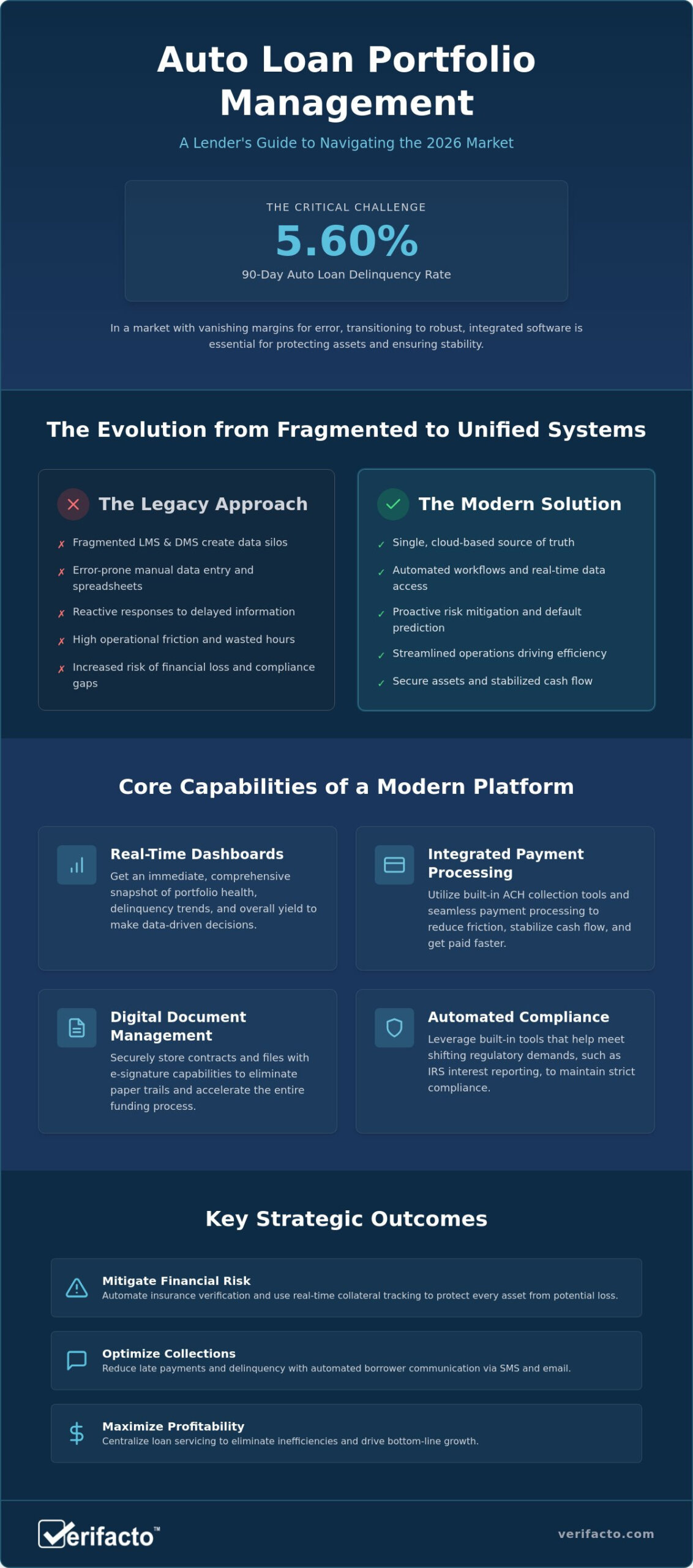
With 90-day auto loan delinquency rates hitting 5.60% in early 2026, the margin for operational error has effectively vanished. You’re likely tired of the friction caused by fragmented data between your LMS and DMS or the manual grind of tracking borrower insurance. These inefficiencies don’t just waste time; they create blind spots that put your collateral at risk. Transitioning to robust auto loan portfolio management software is no longer a luxury for lenders who want to maintain stability and protect their bottom line in this volatile market.
This strategic guide provides a clear path to centralize your servicing, automate risk mitigation, and maximize your portfolio’s profitability. You’ll learn how to replace error-prone manual tasks with automated insurance verification and streamlined collection tools that drive efficiency. We will explore how a unified cloud architecture provides the real-time visibility you need to stay ahead of delinquencies and ensure your operations remain compliant with the shifting regulatory requirements of 2026. It is time to move beyond fragmented systems and secure your assets with a proactive, technology-driven approach.
Key Takeaways
- Learn how to eliminate operational silos by integrating your LMS and DMS into a single, cloud-based source of truth for all borrower and vehicle data.
- Discover the power of real-time collateral tracking to automate insurance verification and deploy CPI solutions that protect your assets from financial loss.
- Identify the critical features to prioritize when selecting auto loan portfolio management software to ensure your technology scales alongside your business growth.
- Explore how automated borrower communication through SMS and email can stabilize your cash flow by significantly reducing late payments and delinquency rates.
- Gain a strategic framework for centralizing your loan servicing to maximize profitability while maintaining strict compliance in a shifting regulatory environment.
What is Auto Loan Portfolio Management Software in 2026?
In the current lending environment, auto loan portfolio management software serves as the central nervous system for your entire operation. It’s no longer just a digital ledger for recording payments; it’s a comprehensive cloud-based ecosystem designed to oversee the complete lifecycle of a loan. From the moment a contract is signed to the final payoff or recovery, this technology ensures every variable is tracked in real time. For lenders managing various auto loan structures, having a unified platform is the only way to maintain control over high-risk portfolios and complex regulatory demands.
The Evolution of Auto Finance Technology
The transition from legacy on-premise servers to agile, cloud-based architectures has redefined industry standards. Previously, data lived in silos, forced into manual spreadsheets that were outdated the moment they were saved. Today, real-time data access is the benchmark. Automated loan servicing platforms have replaced the clunky, slow-moving databases of the past. This evolution allows you to respond instantly to market shifts or borrower behavior changes. Scaling your business now depends on how quickly your software can process and visualize information without the friction of manual handling.
Core Capabilities Every Modern System Needs
To remain competitive and compliant, your software must offer more than just basic functionality. A robust system should function as a complete auto loan portfolio management software solution that includes these non-negotiable features:
- Integrated Payment Processing: Built-in ACH collection tools and payment processing reduce friction and ensure you get paid faster.
- Real-Time Dashboards: Comprehensive reporting that provides an immediate snapshot of portfolio health, delinquency trends, and yield.
- Digital Document Management: Secure storage with electronic signature capabilities to eliminate paper trails and speed up the funding process.
- Automated Compliance: Tools that help you meet new requirements, such as the IRS interest reporting deadline on January 31, 2026.
By leveraging these core capabilities, you turn your software into a strategic asset. It’s about more than just staying organized; it’s about building a foundation for sustainable growth and long-term security.
The Strategic Advantage of Integrated LMS and DMS Architectures
Efficiency in auto lending doesn’t come from working harder; it comes from working smarter through system integration. Most lenders operate with a fundamental handicap: their Dealer Management System (DMS) and Loan Management System (LMS) exist as separate entities. This disconnection creates data silos that force your team to jump between platforms, wasting hours on redundant tasks. High-performing auto loan portfolio management software eliminates this friction by housing every phase of the loan lifecycle within a single, unified architecture.
Housing your dealer and loan management in one system ensures a seamless transition from the moment of origination to long-term servicing. When these functions are integrated, data flows instantly without the need for manual intervention. This reduces the risk of human error and prevents the double-handling of files that often plagues growing portfolios. A unified platform also improves the borrower experience. Your team can provide immediate, accurate answers because they have a single source of truth for all loan data, from the initial sales contract to the most recent payment history.
Why Separate Systems Are Costing You Money
Fragmentation isn’t just an annoyance; it’s a financial drain. Relying on separate systems often leads to API latency and synchronization failures, where data in one system doesn’t match the other. These gaps cause missed insurance expirations and late payments because your risk mitigation tools aren’t receiving real-time updates. The security risks are equally high. Managing multiple vendor logins and databases increases your vulnerability to data breaches and makes it harder to maintain strict access controls. Furthermore, failing to maintain a cohesive data trail can lead to significant issues during audits, especially when measured against the latest CFPB examination guidelines regarding consumer financial protection.
Maximizing Efficiency for Independent Dealers
Independent dealers face the unique challenge of managing large portfolios with lean teams. You don’t have the luxury of dedicated departments for every task. Automation is your equalizer. By integrating what is dms functionality directly with your servicing workflows, you empower your staff to handle a higher volume of accounts without increasing headcount. Using modern auto loan management software allows you to scale your operations while maintaining total control over your assets. Consider how a centralized management approach could simplify your daily operations and protect your bottom line from the costs of inefficiency.
Mitigating Risk with Real-Time Collateral and Insurance Tracking
Protecting your assets requires more than just tracking monthly payments. In a market where nearly 78% of “Buy Here, Pay Here” lending volume goes to subprime borrowers, the risk of uninsured collateral is a constant threat to your capital. Most legacy systems treat insurance tracking as a secondary add-on or a manual checklist. However, high-performance auto loan portfolio management software recognizes that collateral protection is a core operational pillar. Real-time monitoring allows you to identify lapsed policies immediately, drastically reducing your financial exposure before a total loss occurs.
Managing these risks through manual processes is an expensive, uphill battle. Your team shouldn’t waste time making phone calls to agents or mailing letters to verify coverage. By utilizing intelligent decisioning in auto finance, you can automate the entire verification lifecycle. This ensures every vehicle in your portfolio remains protected without the need for constant human oversight. It’s a shift from reactive recovery to proactive protection that preserves your yield and stabilizes your operations.
The Mechanics of Automated Insurance Verification
Automated verification works by establishing direct digital connections with insurance carriers to confirm active coverage. The software continuously monitors your portfolio and flags policy cancellations or non-renewals the moment they’re issued. This technology virtually eliminates the “gap time” where a vehicle is on the road without protection. Automated alerts notify both your team and the borrower simultaneously, ensuring coverage is restored before an incident happens. You don’t have to wait for a paper notice to arrive in the mail; you get the data you need to act instantly.
Implementing CPI Solutions for Total Portfolio Security
When a borrower fails to maintain their own policy, you need a reliable fail-safe. Understanding what is collateral protection insurance is vital for any lender operating in high-risk environments. A modern auto loan portfolio management software system automates the placement and billing of these lender-placed policies, ensuring there’s never a break in coverage. This isn’t just about protection; it’s about seamless execution. The software handles the complex task of calculating premiums and adding them to the borrower’s ledger while ensuring full compliance with state regulations. This integrated approach to CPI solutions provides a safety net that traditional accounting software simply can’t provide.
Optimizing Collections through Automated Borrower Communication
Traditional collection methods often fail because they’re reactive and inconsistent. When you rely on staff to make manual calls, you create a bottleneck that allows delinquencies to grow. Implementing auto loan portfolio management software changes this dynamic by shifting the burden of outreach to automated workflows. Automated SMS and email reminders ensure that every borrower receives a professional notification before their payment is due, which significantly reduces the likelihood of a simple oversight turning into a 30-day delinquency.
The psychology of automation is simple: consistency breeds reliability. Borrowers are more likely to prioritize a payment when they know a reminder will arrive exactly three days before the due date. Manual outreach is often perceived as aggressive or unpredictable, which can damage the long-term borrower relationship. In contrast, automated communication maintains a professional distance while asserting clear collection priorities. You can even customize these workflows based on borrower behavior. For instance, a “perfect payer” might only get a single email, while a “chronic late payer” receives a series of SMS reminders and a digital payment link to lower the barrier to entry.
Boosting Recovery with Multi-Channel Outreach
Text messaging has become the most effective tool in modern collections. While emails often go unread and phone calls are frequently ignored, SMS has an exceptionally high open rate. Scheduling these messages to trigger before the due date keeps your loan top-of-mind. This strategy is the foundation of improving collection efficiency auto loans, as it addresses potential issues before they escalate into charge-offs. By keeping communication clear and automated, you reduce the friction in the payment process and stabilize your monthly cash flow. A modern auto loan portfolio management software platform allows you to scale this outreach without adding a single person to your collections department.
Compliance and Security in Borrower Engagement
Automation doesn’t just improve efficiency; it also provides a layer of legal protection that manual processes can’t match. Every text and email sent through your system is logged, creating a permanent audit trail of all borrower interactions. This is essential for proving that your team has adhered to TCPA and FDCPA guidelines. Using auto finance compliance management tools within your software allows you to monitor communication frequency and ensure you don’t violate “harassment” thresholds. By standardizing your outreach, you eliminate the risk of an employee saying something inappropriate or calling at an illegal hour.
Ready to transform your recovery process? Explore how automated borrower communication can reduce your delinquencies today.
Evaluating and Implementing the Right Software for Your Portfolio
Selecting auto loan portfolio management software is one of the most critical strategic decisions your business will make this year. It’s not just about buying a tool; it’s about choosing a foundation that supports your entire workflow. Independent dealers often need a system that acts as a force multiplier for a small team, while large finance institutions require the scalability to handle thousands of accounts without performance lag. You must identify where your current system is failing. Is it the lack of real-time visibility? Is it the friction between your sales and servicing data? Define these pain points early to ensure your new platform solves them from day one.
When you speak with vendors, don’t settle for surface-level demos. Ask hard questions about their integration capabilities and security protocols. You need to know exactly how they handle data migration and what their uptime guarantees look like. A platform that claims to be “integrated” but requires manual workarounds is just a legacy system in a new wrapper. Demand a partner that offers both technical proficiency and a strategic understanding of your specific lending niche. This ensures that the technology actually serves your business goals rather than creating new operational hurdles.
Critical Evaluation Criteria for 2026
Your checklist should prioritize three main pillars: integration, protection, and security. First, verify that the system provides a truly integrated LMS and DMS experience to eliminate the data silos discussed earlier in this guide. Second, evaluate the depth of their real-time insurance tracking and CPI capabilities. If the software doesn’t automate the verification process, it isn’t protecting your collateral effectively. Finally, ensure the platform is cloud-native. This provides the agility needed to adapt to regulatory changes and ensures your data is protected by modern security certifications and high uptime standards.
Ensuring a Seamless Transition and Long-Term Success
Implementation shouldn’t be a “rip and replace” disaster. Develop a phased plan that allows your team to migrate data in manageable stages. This minimizes disruption to your daily collections and customer service. Training is equally vital; your staff must feel confident using the new tools to realize the full benefits of automation. Leveraging integrated payment solutions for dealers can provide immediate cash flow benefits during this transition. Once live, measure your ROI by tracking specific metrics: reduction in delinquency rates, hours saved on manual insurance tracking, and overall portfolio yield. A successful implementation turns your software from an expense into a primary driver of profitability and security.
Securing Your Portfolio for a Modern Lending Environment
The lending landscape of 2026 demands a shift from manual oversight to automated precision. By integrating your dealer and loan management systems, you eliminate the data silos that lead to operational blind spots and lost revenue. Real-time insurance tracking and automated borrower communications aren’t just features; they’re essential safeguards against rising delinquency rates and collateral loss. Selecting the right auto loan portfolio management software allows you to scale your business with confidence, knowing your workflows are optimized for maximum efficiency and security.
Verifacto has been a trusted partner for automotive finance professionals since 2014. Our platform provides the cloud-based security and automated compliance tools you need to stay ahead of regulatory shifts. With real-time insurance tracking and CPI solutions built directly into the system, you can focus on expanding your portfolio while we handle the complexities of risk mitigation. Streamline your portfolio with Verifacto’s integrated LMS & DMS platform today. You have the power to transform your operations and secure your financial future through smarter technology.
Frequently Asked Questions
What is auto loan portfolio management software?
Auto loan portfolio management software is a centralized digital platform that tracks the entire loan lifecycle from origination to final payoff. It combines accounting, borrower communication, and collateral monitoring into one cloud-based system. This technology is essential for lenders who need to manage risk and maintain profitability in high-stakes environments where manual tracking is no longer sustainable.
How does integrated LMS and DMS software improve efficiency?
Integration eliminates data silos by housing dealer and loan management functions within a single architecture. This prevents the double-handling of files and reduces manual entry errors that often occur when switching between separate platforms. It streamlines your daily workflows, allowing your team to focus on portfolio growth rather than troubleshooting data discrepancies between systems.
Can I track borrower insurance in real-time with this software?
Yes, modern auto loan portfolio management software connects directly with insurance carriers to provide instant updates on policy status. You receive automated alerts for cancellations or non-renewals, which eliminates the dangerous gap time where your collateral is unprotected. This proactive approach is far more effective than manual tracking or waiting for paper notices to arrive in the mail.
What are the benefits of automated borrower communication?
Automated communication through SMS and email ensures consistent outreach without increasing your headcount. It triggers payment reminders before due dates, which helps borrowers prioritize their loans and significantly reduces the likelihood of late payments. This professional, multi-channel approach stabilizes your cash flow and maintains positive, reliable relationships with your customers through every stage of their loan.
How does CPI integration protect my loan portfolio?
CPI integration acts as a critical fail-safe by automatically placing lender-placed insurance when a borrower’s policy lapses. The software handles the placement, billing, and calculation of premiums directly on the borrower’s ledger. This ensures your assets remain covered at all times while maintaining strict compliance with state-specific regulations and preventing financial loss from uninsured accidents.
Is it difficult to migrate my data to a cloud-based management system?
Data migration is a structured process designed to minimize business disruption through a phased implementation plan. While moving from legacy systems requires careful mapping, a dedicated support team typically guides you through the transfer of borrower records and payment histories. Modern cloud platforms are built for scalability, making the transition a necessary investment in your operational stability.
Does the software help with auto finance compliance?
Yes, the system includes automated tools to help you adhere to TCPA, FDCPA, and federal reporting requirements. Using auto loan portfolio management software ensures that every borrower interaction is logged, creating a permanent audit trail for legal protection. It also monitors communication frequencies to ensure your team stays within regulatory boundaries during the collection process.
How does automated payment processing reduce delinquencies?
Automated payment processing lowers the barrier to entry for borrowers by offering convenient options like ACH and digital portals. When you combine these tools with automated reminders, you remove the friction that often leads to missed payments. This consistency ensures your portfolio remains healthy even as broader market delinquency rates fluctuate, keeping your capital secure and your revenue predictable.